Optimizing Your Career: Strategic Use of AI in Software Engineering

How do senior developers adapt to AI-driven workflows, master “context engineering,” leverage sub-agents, and quantify AI’s impact to ensure career longevity and drive team ROI?
Hello fellow architect!
Having explored the evolving role of AI and its foundational architecture, let’s now pivot to the most critical aspect: how we, as senior developers and technical leaders, strategically navigate this landscape. The challenge isn’t merely adopting AI tools, but integrating them into a coherent professional strategy that mitigates “AI fatigue” and delivers measurable value.
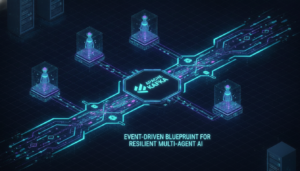
A central theme from our discussion with Fabio was “context engineering”—the nuanced art of managing an LLM’s context window. This involves not only effective prompt design but also the strategic deployment of specialized sub-agents. These sub-agents, operating with isolated and optimized contexts, can resolve specific, orthogonal problems, returning precise answers without polluting the orchestrating agent’s main context. This architectural pattern is crucial for maintaining both efficiency and inferential accuracy in complex workflows.
Our role is shifting from direct code implementation to high-level architectural design and the coordination of AI-driven processes. This entails breaking down complex problems into smaller, AI-addressable tasks and then rigorously planning and controlling the quality of the AI-generated solutions. This elevates the developer to an architect of AI workflows, demanding a deeper understanding of system design and a focus on critical thinking over rote coding.
Quantifying the return on investment (ROI) from AI integration is paramount. It’s no longer sufficient to simply state that AI is used; we must demonstrate its impact on key metrics. This includes showing improvements in code quality, accelerated delivery cycles, or an increased volume of features shipped within the same sprint. This data-driven approach is essential for communicating value to leadership and securing continued investment in AI-enhanced development practices.
Key Takeaways:
* “Context engineering” and the strategic use of specialized sub-agents are critical for managing LLM efficiency and maintaining inferential integrity in AI-driven workflows.
* The senior developer’s role is evolving into an AI architect, orchestrating intelligent agents and focusing on high-level design and quality control.
* Measuring and communicating AI’s impact on code quality, delivery speed, and overall team ROI is essential for demonstrating value and future-proofing one’s career.
Call to Action:
Listen to the full deep dive here: https://www.youtube.com/watch?v=zHLIuAp_EyQ
How are you handling this in your architecture? Hit reply.
Cheers,
Pedro Cavalero