The SDD Reality Check: Are We ‘Intent Designers’ or Still Coders?
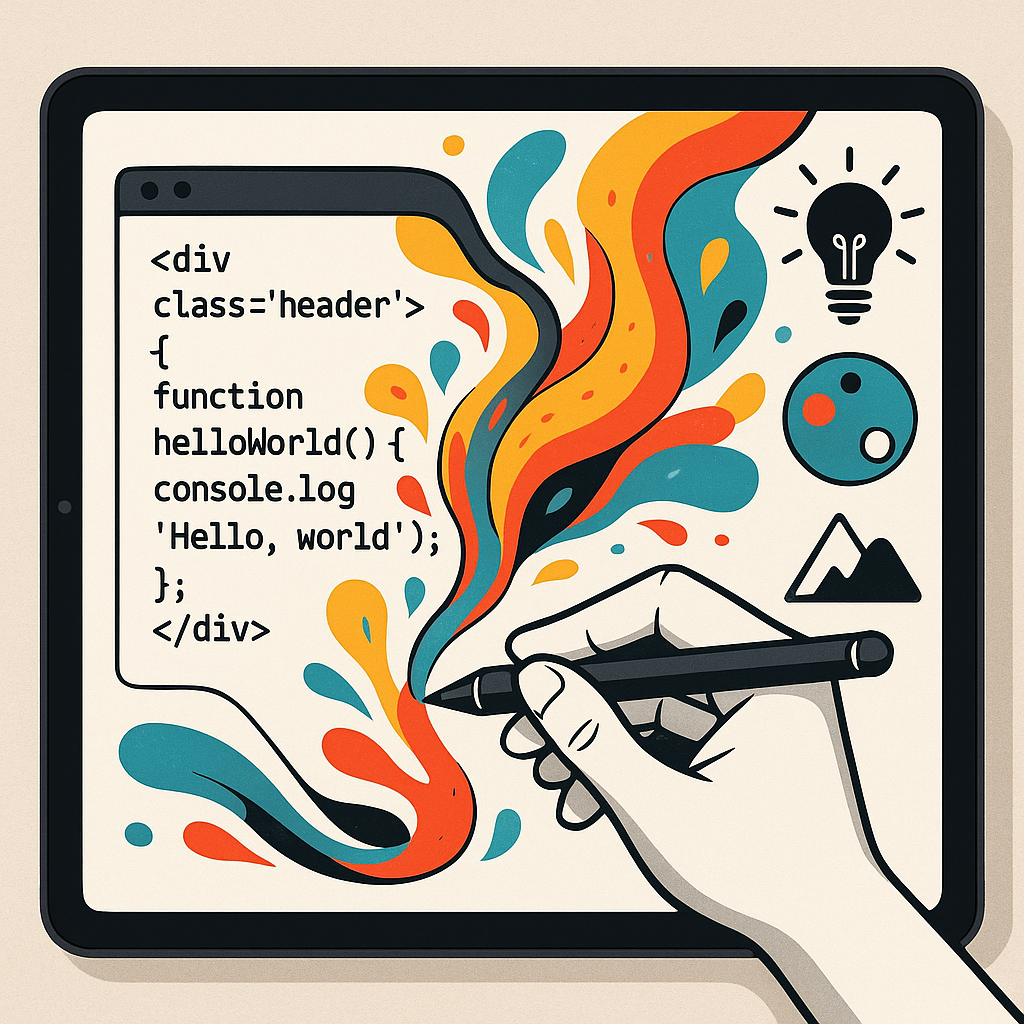
Natural language specifications are excellent for backend logic, but they hit a wall when it comes to visual frontend and complex interactions.
Will English ever fully replace traditional programming languages?
As AI coding agents become more capable, a popular narrative is emerging: developers will soon become “intent designers” who write plain-English specifications, while the AI generates and compiles the binary code behind the scenes.
While this vision sounds appealing to business managers, it ignores the realities of software engineering. Let’s look at where Spec-Driven Development (SDD) hits a limit, why frontend visual engineering is hard to specify, and why programming fundamentals are more critical today than ever before.
The Visual Wall in Frontend Engineering
Backend business logic, database queries, and unit tests are highly structured, logical, and deterministic. This makes them ideal for Spec-Driven Development. You can describe a user authentication route in three sentences, and the AI will generate the correct code.
But user interfaces and data visualizations are creative, visual, and highly subjective. Try describing a custom interactive chart or an HTML5 Canvas drawing layer in a text prompt. To specify the exact SVG coordinate translations, animations, color hexes, and mouse-drag thresholds in English, your specification will end up looking like a poorly written legal contract.
During our recent podcast, Tila highlighted this visualization limit:
Tila: “Specification is very different depending on what stack or stack libraries you’re going to use… Visualization, this has a level of creativity. Data visualization is even more complicated in my experience because it’s very dependent on what kind of library you’re going to use. Can you describe it very precisely? Probably it’s going to be very difficult.”
If describing the layout in natural language takes more words and effort than writing the TypeScript or CSS directly, the workflow is broken. Yugo shared this exact realization during our conversation:
Yugo: “I know some visualizations that are so complex, like using canvas inside the application… I don’t see that being able to be explained only with the specification. The specification becomes so complex that it will be easier to put your hands into the code directly.”
The Danger of Skipping the Fundamentals
Another major misconception is that because AI can write code, new developers no longer need to learn frameworks, language syntax, or computer science basics.
This is highly dangerous. AI agents are non-deterministic; they make logical errors, hallucinate libraries, and introduce security vulnerabilities. If a developer does not understand the underlying frameworks, they cannot audit the AI’s work. They will simply copy and paste buggy code until the system crashes.
Yugo explained the necessity of developer fundamentals on our podcast:
Yugo: “Beginners developers should continue learning frameworks, how to code, so they can question what AI is generating. They need to learn these new tools… but the fundamentals are what allows you to test and validate the output.”
Without these fundamentals, you are not an “intent designer”—you are a copy-paste operator at the mercy of a black box.
Finding the Pragmatic Balance
To succeed in the age of AI, software engineers must embrace a hybrid workflow: → Spec-Drive the Logic: Use natural language specifications to design backend routing, database models, testing scenarios, and data pipelines. → Hand-Code the Details: Jump into the source code to align CSS borders, write custom canvas renderings, tweak interactive charts, and debug complex local issues. → Act as the Auditor: Spend your energy reading, reviewing, and debugging the code generated by AI. You are the technical director; the AI is the execution layer.
English is a powerful tool to describe intention, but code remains the ultimate contract of truth. Master both to lead the transition.
Key Takeaways
→ UI is Creative: Vague natural language specs hit a wall when dealing with interactive UI elements, canvas drawings, and custom chart designs. → Don’t Skip the Basics: Deep programming fundamentals are essential to audit and validate non-deterministic AI outputs. → Be a Hybrid Engineer: Spec-drive backend logic and architecture, but maintain the hands-on coding skills to tweak frontend visuals and debug complex code.
Listen to the full deep dive here
How are you handling this in your architecture? Leave a comment below!
Cheers,
Pedro Cavalero
P.S. In our next series, we will explore “Harness Engineering” and how to construct robust test harnesses that protect your codebase from AI regressions. Stay tuned!