Why Naive Multi-Agent Scripts Collapse in Production Environments
Hey fellow devs!
Have you ever built a cool AI prototype over the weekend, watched it run flawlessly on your laptop, and thought to yourself: “AI is pure magic, and software engineering as we know it is solved”? You aren’t alone! Many developers are currently caught up in this exact wave of excitement. But what actually happens when you push that lightweight Python script into real enterprise production?
In a recent live session of the Out of the Box Developer Podcast, my co-hosts Sheila, Luis, Hugo, and I sat down with Denis, a veteran Java and enterprise systems engineer with nearly two decades of experience, to discuss what it really takes to build resilient multi-agent systems.
Let’s unpack why naive agent scripts break down under real-world pressure, and how you should think about your architecture before launching agents into the wild.
The Illusion of the “AI Honeymoon”
Right now, our industry is riding a massive wave of enthusiasm. High-level agent frameworks make it look effortless to chain together five or six autonomous agents. In a controlled demo, an agent browses the web, parses a PDF, drafts a customer response, and creates an analytical chart in thirty seconds flat.
It feels effortless because the environment is completely clean. But Denis pointed out during our chat that this temporary euphoria hides a dangerous technical reality:
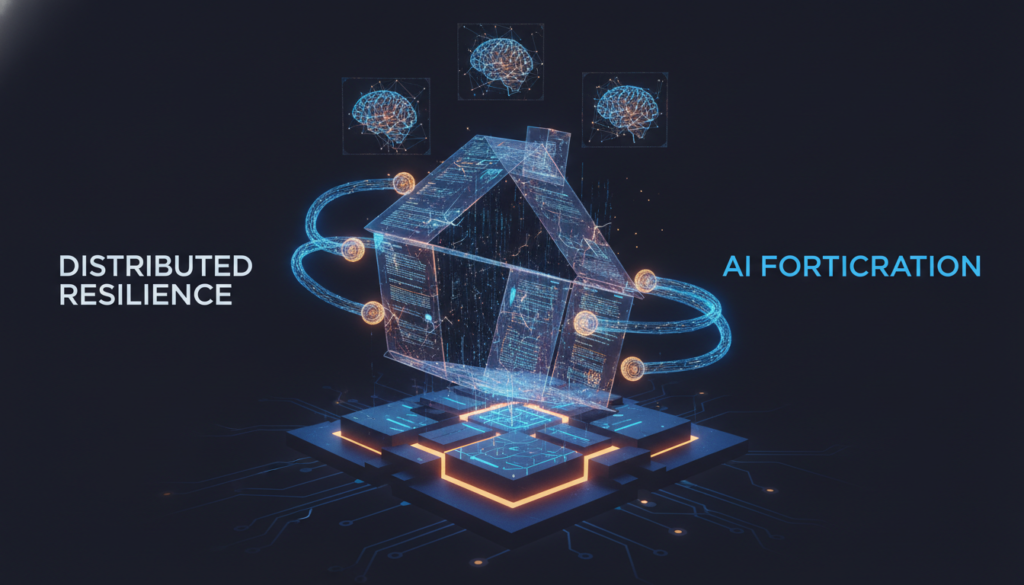
Denis: “We are living in a honeymoon with AI. It looks like you just need to know prompt engineering, write a very good prompt, and the AI will do the magic. The AI will create a report, generate charts, and reply to customers. It feels like we don’t even need software engineering or software engineers anymore—just the right prompts and a simple Python script, and that’s it. It feels like a honeymoon where everything will be great. But then you must remember what happens when we go to production: real-life production is chaotic. You have database deadlocks, third-party APIs that become unavailable, and network latency. That is when you realize your solution is actually a house of cards.”
Denis hit the nail on the head. When your prototype relies on synchronous API calls stitched together inside a basic script, any hiccup in the outside world can cause the entire execution stack to tumble down.
Why Multi-Agent Systems Are Distributed Systems in Disguise
Why do so many developers fall into this trap? Because when we write code that talks to an LLM, the API looks like any standard function call. You pass a string, you wait a moment, and you get a JSON object or string back.
Under the hood, however, a multi-agent system is not a simple linear script. It is a full-blown distributed system!
During our live broadcast, we examined the internal anatomy of a single agent. An individual agent has an LLM brain, system prompts, short-term conversational context, long-term memory, access to external retrieval (RAG), and external tools via protocols like MCP (Model Context Protocol).
Denis described why relying on a raw language model alone is fundamentally fragile:
Denis: “Using a pure LLM is simply not enough. LLMs have severe limitations, such as limited context memory and hallucinations. Every time you interact with an LLM, you need to feed the previous conversation history just to take the next step. In that sense, the memory of an LLM is like a goldfish! That is why we add building blocks—like tool calling, private RAG documentation, and structured memory—to overcome those limitations.”
When you move from one agent to many agents collaborating together, the complexity multiplies exponentially. As I noted during the stream:
Pedro: “This is the anatomy for a single agent—one individual guy. When we talk about multi-agent systems, we are coordinating an entire group of these guys working together.”
If you have four agents running sequentially in an in-memory loop and Agent #3 encounters an HTTP 504 gateway timeout from your model provider, what happens? In a naive script, your entire transaction aborts. Any work done by Agent #1 and Agent #2 is instantly lost, database transactions might be left dangling, and your end user stares at a generic error screen.
The Fallacy of Naive In-Memory Retries
When things go wrong in simple scripts, what is the default developer reaction? Most developers wrap their API call in a basic try/except block with a for loop that retries three times.
While retries have their place, relying exclusively on naive retries inside an agentic pipeline creates severe unintended consequences:
1. The Cascading Timeout Problem
If your orchestrator has an HTTP request timeout of 30 seconds, and each agent call takes 10 seconds, a single retry on Agent #2 will push your total request past the deadline, terminating the connection abruptly.
2. The Thundering Herd and Rate Limits
If a model provider experiences a momentary hiccup and fifty of your background workers start retrying simultaneously every 500 milliseconds, you will instantly hit API rate limits (HTTP 429 Too Many Requests) and exhaust your token quotas.
3. Non-Idempotent Tool Side Effects
Unlike pure mathematical functions, agent tools often perform real-world actions—such as creating a database row, sending a Slack message, or triggering a payment webhook. If an agent crashes midway through processing and retries from scratch, it might duplicate those side effects with disastrous results.
Divide and Conquer: Narrow Scopes Prevent Chaos
So how do senior engineers approach multi-agent systems without losing their sanity? The answer lies in the classic engineering principle of divide and conquer.
Instead of building a monolithic “god agent” that attempts to research, write, format, audit, and publish all at once, you break down complex business problems into tiny, self-contained subtasks.
Denis explained the architectural motivation behind specialized agents:
Denis: “To prevent hallucinations and manage memory constraints, you give a very specific task to each AI agent. For example, one agent does only risk analysis. The LLM does not really understand what it is doing—it is predicting the next words based on learned patterns. By splitting a complex task into small subtasks and assigning each subtask to a specialized agent, that agent takes decisions strictly within its assigned boundaries.”
When every agent is strictly responsible for one deterministic step, testing becomes manageable, input and output schemas can be strongly validated, and failure domains are cleanly isolated.
Practical Steps to Prepare Your Architecture
If you are transitioning an AI project from a personal repository to an enterprise environment, here are three immediate actions you should take:
- Audit your failure points: Identify every third-party network hop, database read/write, and external tool call in your agentic flow. Ask yourself: “If this specific dependency is down for two minutes, what happens to ongoing user requests?”
- Decouple state from memory: Never keep long-running workflow state in transient local variables. Persist execution progress to durable storage after each step so tasks can resume seamlessly.
- Set strict resource budgets: Define maximum token limits, execution timeouts, and cost ceilings per execution run to prevent infinite loops and runaway invoices.
Moving beyond the AI honeymoon requires adopting the same engineering rigor that powers any reliable backend system. The good news is that we don’t have to reinvent the wheel—we just have to apply proven distributed design patterns to this exciting new frontier.
Watch the full video here.
What are your thoughts on this? Have you experienced production crashes with AI agent scripts? Share your stories in the comments below!
Cheers,
Pedro Cavalero